
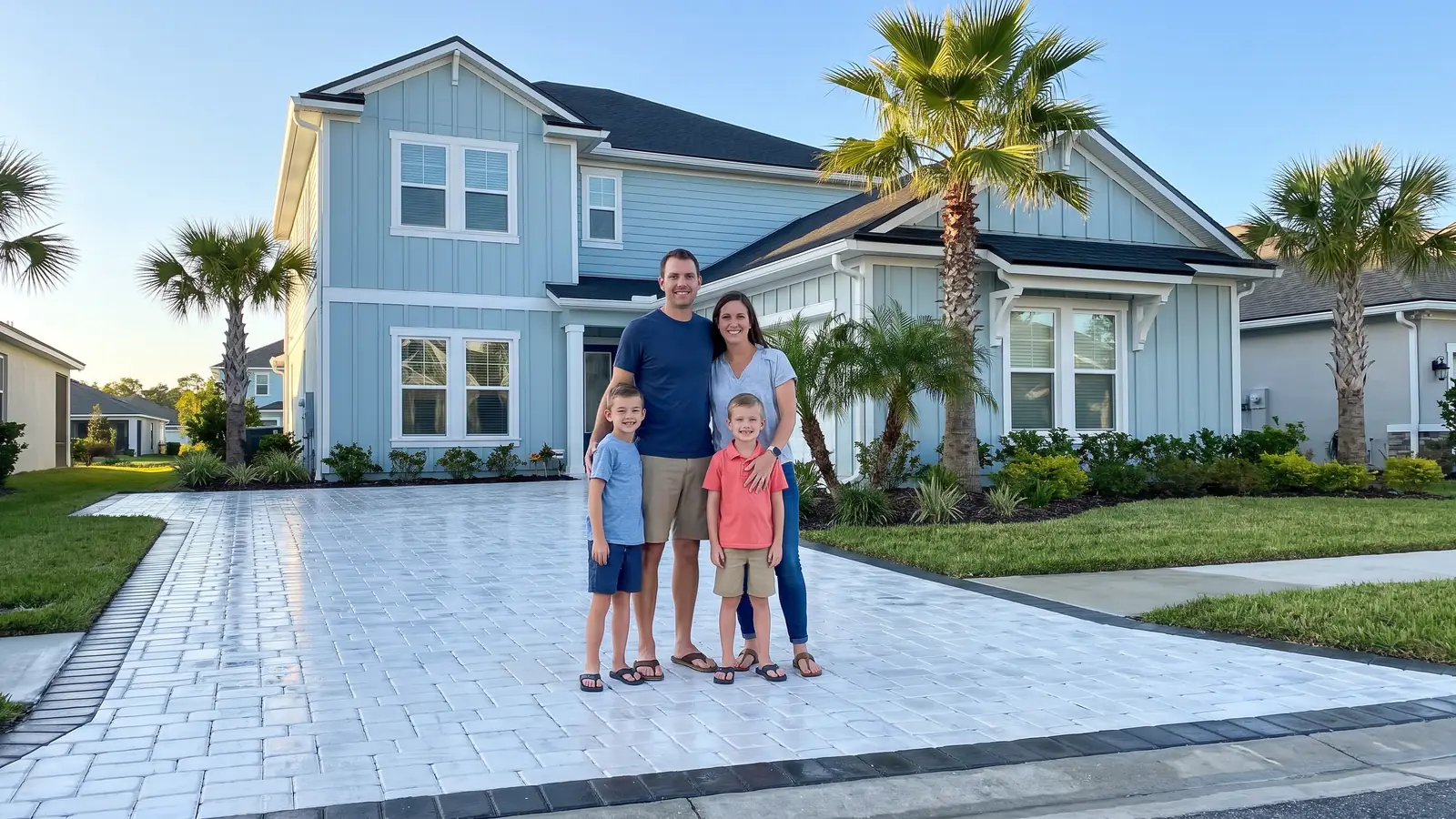
Paver sealing for Jacksonville Beach homes
Paver Sealing in Jacksonville Beach, FL
Salt air reaches most Jacksonville Beach driveways and pool decks and leaves a dull film, so call (904) 747-6756 today.
- Brings out deeper paver color
- Fresh joint sand helps lock pavers in place
- Gives weeds less room to grow
- Makes the surface easier to keep clean
- Free estimate, no obligation
Request a Free Estimate
Free, no obligation.
Fast, careful paver sealing in Jacksonville Beach
Paver sealing in Jacksonville Beach covers driveways, pool decks and courtyards, from the blocks off A1A to the streets near Butler Boulevard. A local contractor cleans, re-sands and seals them, and the estimate is free. Phone (904) 747-6756 or write in, and a reply reaches you within 1 business day, usually much sooner.
Salt film, loose sand and a gray cast are the usual signs near the ocean. Once the pavers are washed, the joints packed and a coat laid down, the color comes back and the sand stays put. To get a price for your home, request your free estimate, with no obligation.
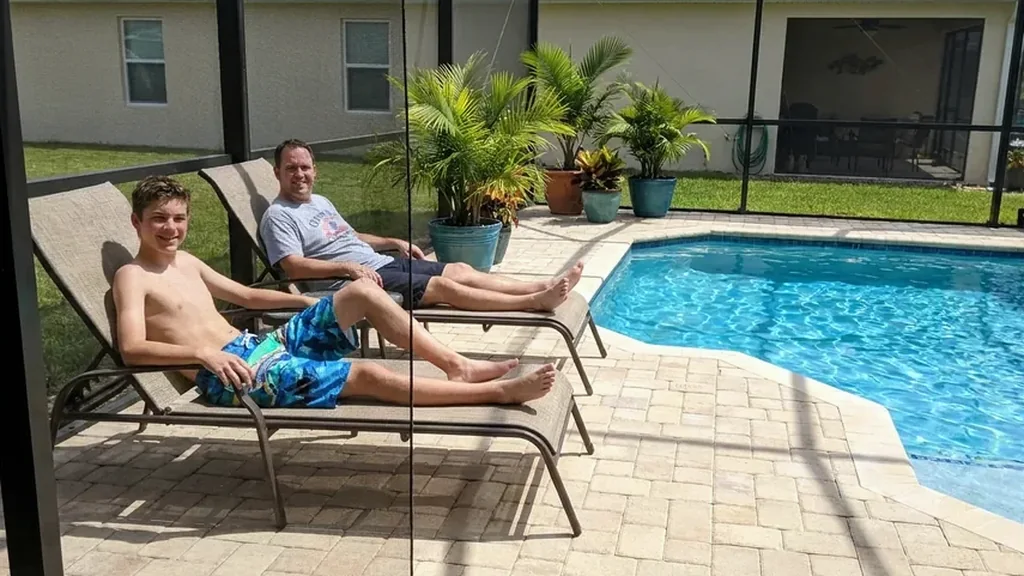
Why hire a local paver sealing contractor in Jacksonville Beach?
Jacksonville Beach sits on a barrier island, so salt air, beach sand and storm season all shape a paver job. People here tend to want a contractor who plans for that, so call (904) 747-6756 and ask how they handle it.
You do not need to be home
One Jacksonville company says its estimates are free and the owner need not be there. Ask how it works for your Jacksonville Beach home.
Published pricing to compare
Northeast Florida companies commonly publish $1.75 to $3.25 per square foot to clean, sand and seal pavers.
Grip on the pool deck
Matte and penetrating finishes keep better footing when wet. A gloss coat needs an anti-slip additive near a pool.
The date stays yours
You pick when the work happens, including before or after storm season. Saying no to the quote costs nothing.
Get Your Free Estimate in Jacksonville Beach
Tell us about your pavers in Jacksonville Beach.
Free, no obligation
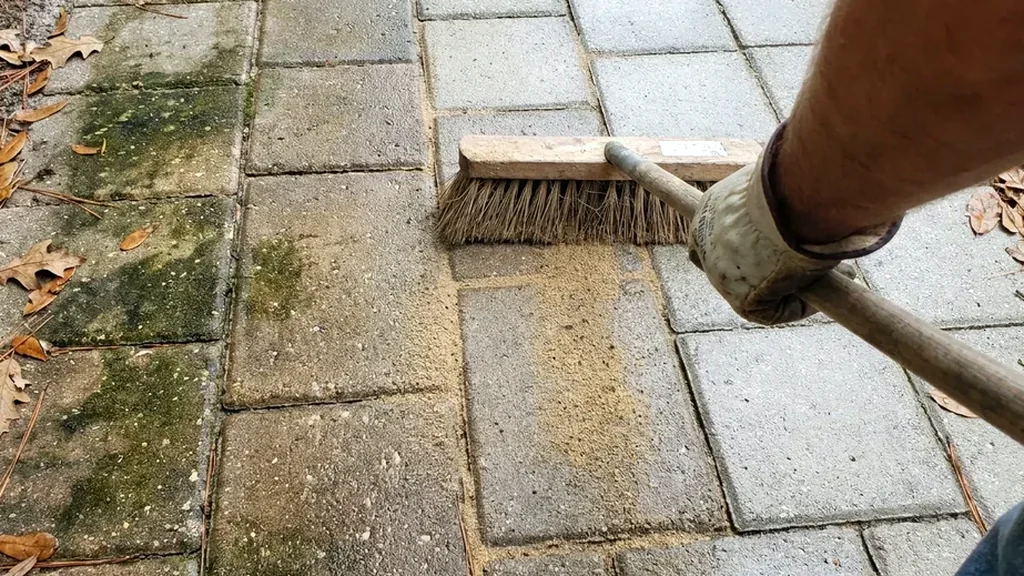
What paver problems show up most in Jacksonville Beach?
Salt that settles on every surface
The University of Florida says plants within about an eighth of a mile of salt water need to handle salt spray. In Jacksonville Beach, much of the city sits inside that band, and pavers catch the same salty mist. A dry white film builds up, and the color looks washed out under it. The wash has to remove that film before any sealer goes on, or the coat will hold it. Owners who rinse their pavers with fresh water now and then tend to see less buildup between coats.
Pavers that run into city right-of-way
Many driveways here continue past the property line toward the street. The city says most homeowner use of its right-of-way needs a revocable encroachment permit, and the city can take that land back at any time. That matters if you plan to reset or replace pavers near the curb. A seal-only job is simpler, but ask before you add new pavers out front. Ask the contractor to mark where your property line falls so everyone knows which pavers are yours to change.
Tires turning on a short driveway
Lots near the ocean are often tight, and zoning caps the house and required driveway at 35 percent of the lot in single-family districts. Short drives mean cars turn and back on the same few feet of pavers each day. One Jacksonville company says turning tires loosen joint sand, which lets pavers creep and settle. Those tire lanes usually need the most sand and the most cleaning. Townhouse lots in the RS-3 district must fit two parking spaces in the driveway, which keeps those pavers busy. Tight joints and a firm edge help them hold up.
Water over the dunes in a big storm
During Hurricane Matthew in 2016, water went over the dunes at Jacksonville Beach and reached at least 2nd Street. Storm water like that leaves sand and grit in the joints and a film on the surface. Pavers should be fully cleaned and dried before anyone seals over it. Any spot that settled after the storm gets fixed first, since a coat would only lock in the dip. Irma brought flooding again less than a year later, so some lots may have been through more than one round. Tell the contractor about any storm water you remember.
Humid air that clouds a fresh coat
Jacksonville Beach gets about 52 inches of rain a year, with August the wettest month. One Jacksonville company says most white or cloudy sealer comes from sealing damp pavers or laying it on too thick. Muggy mornings can keep a shaded courtyard damp longer than you would think. A patient contractor checks the surface before the sprayer comes out. Courtyards boxed in by walls may need a full sunny day to dry. Early afternoon is often a good window to apply sealer.
Does living close to the ocean in Jacksonville Beach change paver sealing?
Yes, since salt spray reaches farther than most people expect. The University of Florida says salt damage is common within a couple of miles of salt water, and the whole city sits on a barrier island. Homes east of A1A, three blocks or less from the ocean, take the most. Say how close you are to the beach when you request your free estimate.
Older homes in Jacksonville Beach sit beside mid-century modern houses and newer builds. The city is known for mid-century designs, many by architect William Morgan, and the Casa Marina Hotel dates to 1925. Older lots may have pavers laid over many years, with patches that do not match. Call (904) 747-6756 if your pavers were added in stages and you want one even look.
Single-family zoning here allows up to 50 percent of a lot to be covered with hard surface. That leaves room for pavers, but it also means the drive, walk and patio may be the main outdoor space. A pool deck and a courtyard can add up quickly on a small lot. When you request your free estimate, list every surface so the quote covers them all.
What does paver sealing cost in Jacksonville Beach?
The common published range in Northeast Florida is $1.75 to $3.25 per square foot to clean, sand and seal. In Jacksonville Beach, heavy salt film, storm grit and settled tire lanes push a job up in that range. A drive with tight joints and light grime sits nearer the bottom. Call (904) 747-6756 and ask for a free number on your layout.
Access also counts on close-built beach lots. Locked gates, stairs and narrow side yards add prep time, one Jacksonville company says. Pool decks may need a different sealer than the drive, which can change the total. You can request your free estimate and ask the contractor to list each surface on the quote.
| Paved area | Typical example | Clean, sand and seal |
|---|---|---|
| 300 sq ft | Small patio or walkway | $525 to $975 |
| 600 sq ft | Two car driveway | $1,050 to $1,950 |
| 1,000 sq ft | Large driveway or pool deck | $1,750 to $3,250 |
| 1,500 sq ft | Driveway plus pool deck | $2,625 to $4,875 |
Math based on the $1.75 to $3.25 per square foot that Northeast Florida paver companies published as of November 2026. Your contractor sets the actual price after seeing the surface. Repairs, leveling and stripping failed sealer are usually extra.
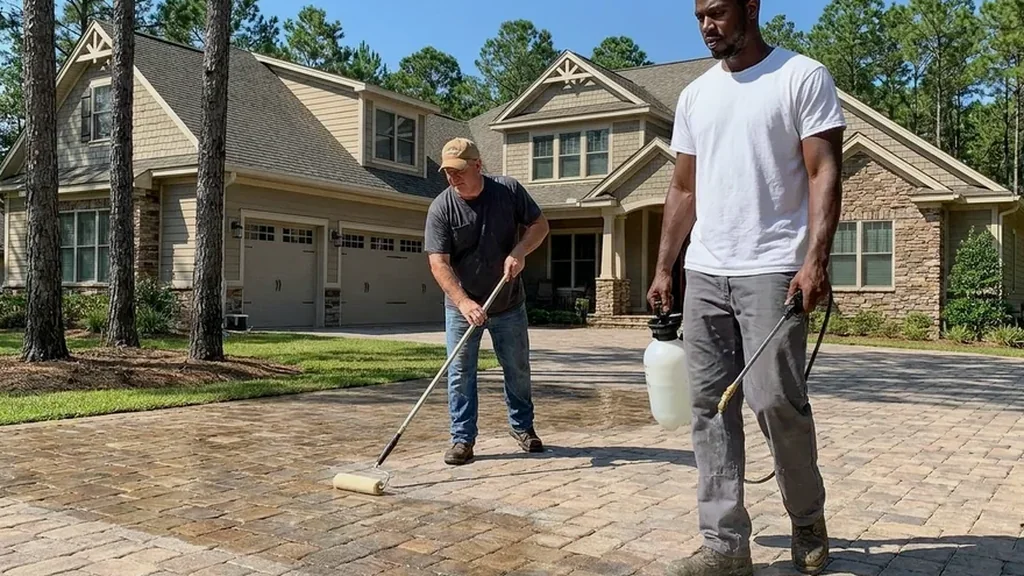
How does a paver sealing job work in Jacksonville Beach?
Look at the salt, the slope and the street edge
The contractor checks how salt film has built up and how water runs off toward the street. Settled spots from storms or tires get marked for repair before sealing. Pavers near the curb may sit in city right-of-way, which matters if any need replacing. The old coat gets checked too, since water-based sealer cannot go over solvent-based. Tell the contractor about any storm that put water on your lot.
Wash off salt, sand and grime
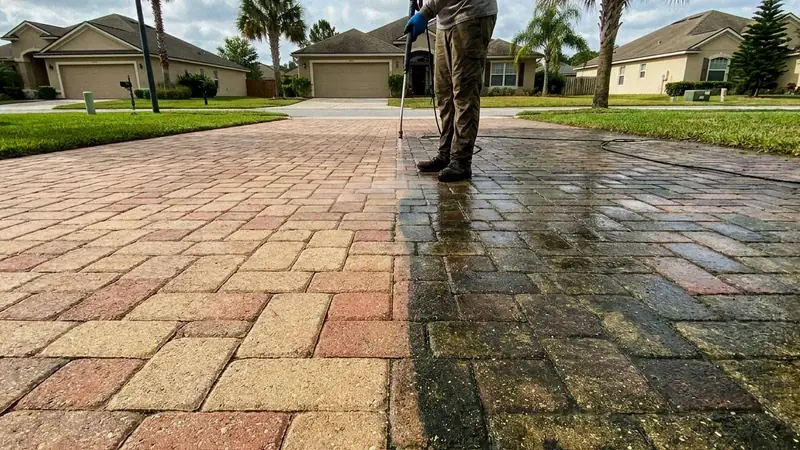
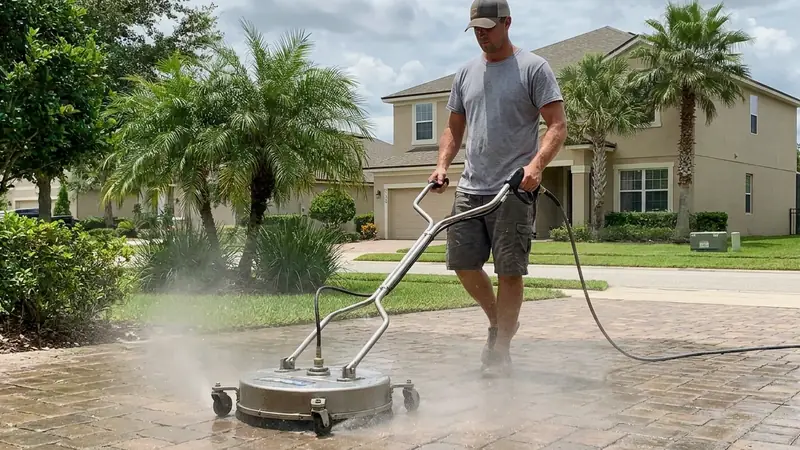
A surface cleaner lifts salt, beach sand and tire marks without tearing up the joints. Mildew in shaded courtyards gets extra attention. On pool decks, rinse water is kept out of the pool. Oil and rust spots get a pre-treatment so the coat does not lock them in. Furniture and planters get moved off the deck before the wash begins.
Refill the joints with sand
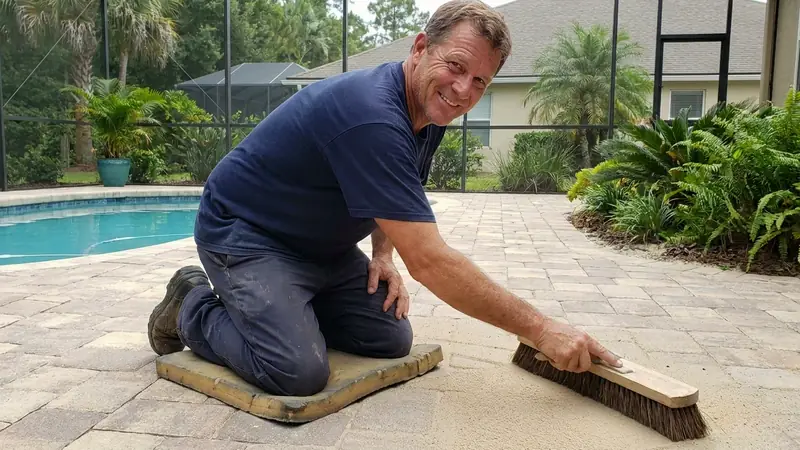
Washing pulls sand from the joints, and turning tires loosen it further. Silica joint sand is swept in until the gaps are full. Tight joints keep pavers from creeping on a short Jacksonville Beach driveway. Packed joints give beach weeds fewer places to root. Edges along the drive get checked so the sand has something to hold against.
Wait for a dry surface
Humid beach air and summer storms slow drying. Sealing damp pavers can turn the finish white or cloudy, so the contractor checks before spraying. Shaded spots between houses dry last. Moving the date a day is better than a hazy coat. The pool area and any walls near the deck get covered from overspray.
Spray, back-roll and stay off
The sealer goes on in the finish you chose, sprayed and then rolled into the joints. Pool decks get a finish with grip. Cars usually stay off about a day, and foot traffic comes back sooner. Companies commonly quote two to five years between coats, and salt exposure is worth asking about. Ask for the sealer name in writing so the next coat can match.
Complete paver services in Jacksonville Beach
The work starts with a cleaning that clears salt film, tire marks and any mildew. Washing pulls joint sand, so silica sand goes back in and is swept tight. Once the pavers are dry, the sealer is sprayed and back-rolled. The contractor can give you a timeline at (904) 747-6756.
Driveways near the ocean carry tires, salt and beach sand, so they wear first. Pool decks get splash, sun and bare feet, which is why grip matters there. Courtyards between close-set houses may stay shaded and damp. List the drive, deck and any courtyard when you request your free estimate.
For pool decks, one Jacksonville company says matte or penetrating sealer is the safest choice. A wet look brings out color on a driveway but shows scuffs sooner, and gloss near water needs an anti-slip additive. Water-based sealer cannot go over solvent-based, so the old coat counts too. Weigh the options with the contractor at (904) 747-6756.
Hurricane season runs June 1 to November 30, with the peak around September 10. One Jacksonville company suggests fall sealing, after storm season, to carry pavers through the dry winter. Summer can work between storms if the pavers dry out. Ask about open dates when you request your free estimate.
Questions to ask before you hire
- Will you sweep in new joint sand, and what kind do you use?
- If the forecast turns wet, how do you decide whether to push the date?
- What will you do if the sealer leaves a white haze?
- How many days should cars stay off a freshly sealed driveway?
- When should I turn the irrigation off, and when can it come back on?
- Can you send proof of liability insurance and tell me what license this job calls for?
- Which sealer are you planning to use, and is it a match for whatever was put on before?
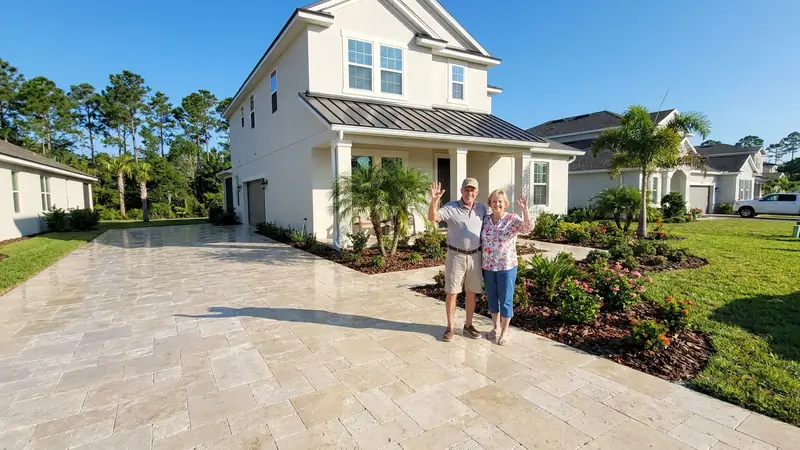
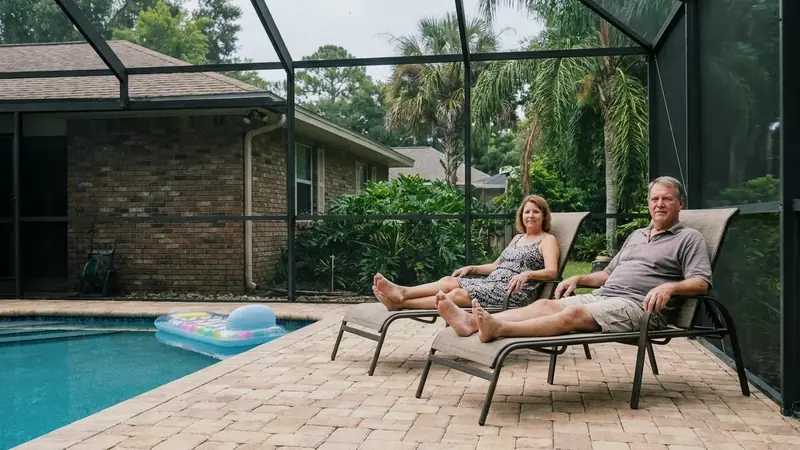
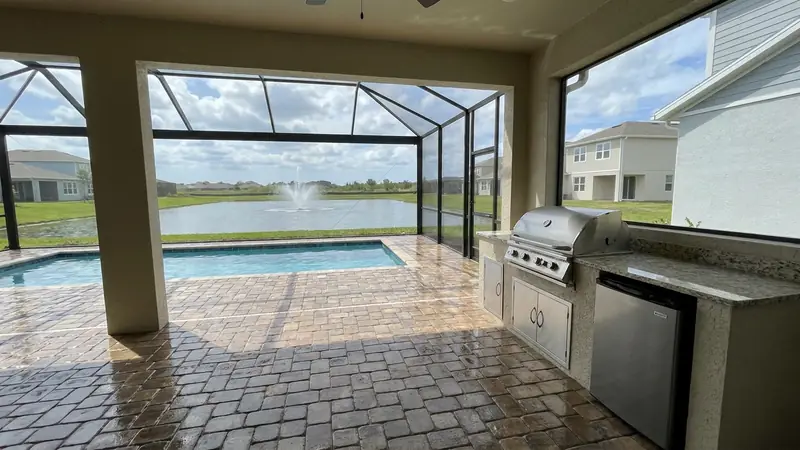
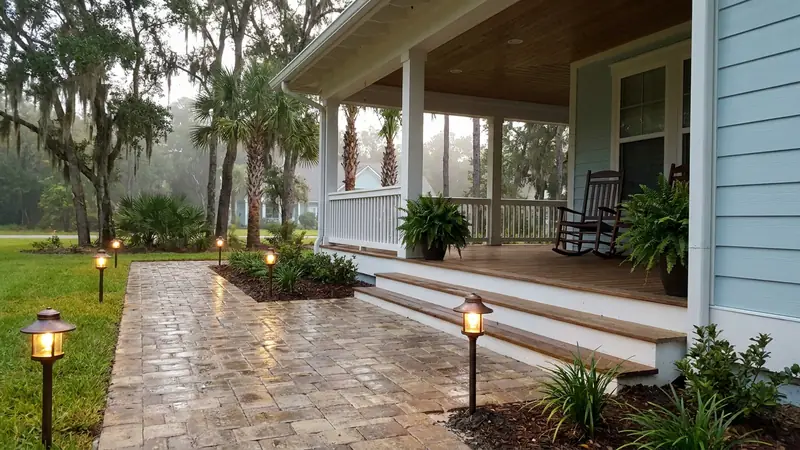
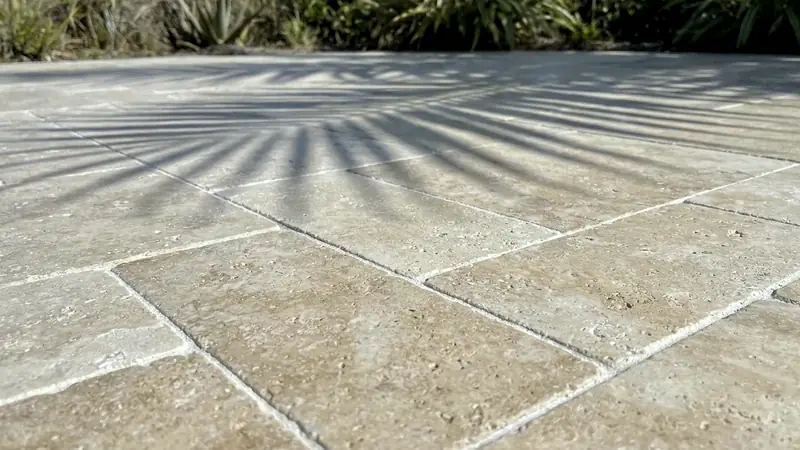
What do sealed pavers look like around Jacksonville Beach?
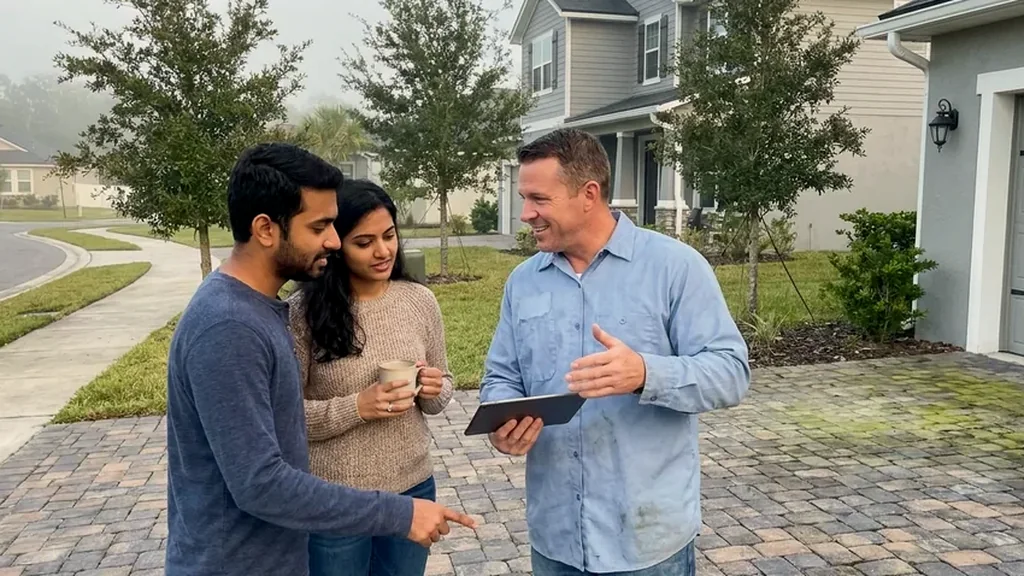
Why local matters in Jacksonville Beach
Salt film has to come off before any coat, and damp beach air can cloud a rushed job. Both shape the cleaning and the timing on the island. Inland crews sometimes cut the dry time short, so call (904) 747-6756 and ask how drying is handled.
Beach lots bring their own setup. Short drives, tight side yards and pool decks close to the house change where gear goes, and curbside pavers can raise right-of-way questions. When you request your free estimate, say if your drive reaches the street.
Storm season matters most here. A contractor who has seen what Matthew pushed over the dunes will check for settling and grit before talking about sealer. Fall, after the peak of hurricane season, is a popular time for that reason. To get on the fall list, request your free estimate.
What part of Jacksonville Beach does a paver contractor cover?
The whole city is covered, from the ocean blocks off A1A to the neighborhoods near Butler Boulevard and 3rd Street South. Beach Boulevard, built on an old railroad bed in the late 1940s, runs through the middle and ends three blocks from the ocean. Schools such as Seabreeze Elementary and Fletcher Middle help place a street. Call (904) 747-6756 and name the closest one.
The town began as Ruby, became Pablo Beach in 1886 and took its current name in 1925. Its pier was destroyed by Hurricane Floyd in 1999, rebuilt, and damaged again by Matthew in 2016. The 1947 Life Saving Corps Station still stands near the beach. From any of those blocks, you can request your free estimate for free.
Frequently Asked Questions
How much does it cost to get your pavers sealed in Jacksonville Beach?
Jacksonville Beach quotes usually fall in the regional range of $1.75 to $3.25 per square foot to clean, sand and seal. Salt film, storm grit and settled spots push a Jacksonville Beach job higher in that range. Ask for the square footage of each surface on the quote. Pool decks and drives can be priced on separate lines.
Why is paver sealing so expensive in Jacksonville Beach?
Most of the price is labor and prep, not sealer. The pavers have to be washed, re-sanded and fully dried before the coat goes on. Salt film and tight beach lots can add time, which shows up in the price. A low bid that skips the drying time can lead to a cloudy coat.
Is it better to spray or roll paver sealer?
Most crews here spray it on, then back-roll it. Spraying spreads the coat evenly, and the roller pushes it down into the joints, one Jacksonville company explains. Rolling alone can leave lap marks, and spraying alone can put down too much.
How long does sealer last on pavers in Jacksonville Beach, Florida?
Near the ocean, expect two to five years between coats, the span companies quote. Pool decks and drives in full sun and salt air tend to land on the shorter side. If water soaks in and darkens the pavers instead of beading, the coat is worn. A fresh-water rinse now and then can help a coat last near the ocean.
Is there a downside to sealing pavers near the beach?
The main downsides are upkeep and timing. Sealer needs a new coat every few years, and humid air can make a damp coat turn cloudy if it is rushed. A gloss finish on a pool deck also needs an anti-slip additive. For most owners near the beach, keeping color and sand in place is worth it.
What sealer is safest for a Jacksonville Beach pool deck?
A matte or penetrating sealer is the usual pick for a pool deck. One Jacksonville company calls natural or matte penetrating sealer the safest near pools. If you want a gloss look, ask for an anti-slip additive. The finish should also stay cool and comfortable under bare feet.
When is a good time to seal pavers in Jacksonville Beach?
Fall is a good time, after the peak of hurricane season. One Jacksonville company says fall sealing helps carry pavers through the dry winter. Summer can work between storms if the pavers dry out fully. Planning ahead also helps you book before the busy fall weeks.
Do I need a permit to work on pavers near the street in Jacksonville Beach?
Sealing alone usually changes nothing on paper, but new pavers in city right-of-way can. The city says most homeowner use of its right-of-way needs a revocable encroachment permit. Check with the city before adding or replacing pavers near the curb. The city's planning staff can tell you what applies to your lot.
How much should I pay for paver sealing in Jacksonville Beach?
Expect a price inside the published range of $1.75 to $3.25 per square foot to clean, sand and seal. A small Jacksonville Beach patio usually costs more per foot, because setup time does not shrink. Compare bids on the same square footage and the same sealer type.
Can sand and salt from a storm be cleaned off before sealing?
Yes, the cleaning step removes storm grit, sand and salt film. After a storm like Matthew, the pavers also need a check for settling. Once they are clean, level and dry, the sealer can go on.
Ready for a Free Estimate in Jacksonville Beach?
Call (904) 747-6756 and tell us about your pavers.
Free, no obligation